
.svg)

David Berenstein

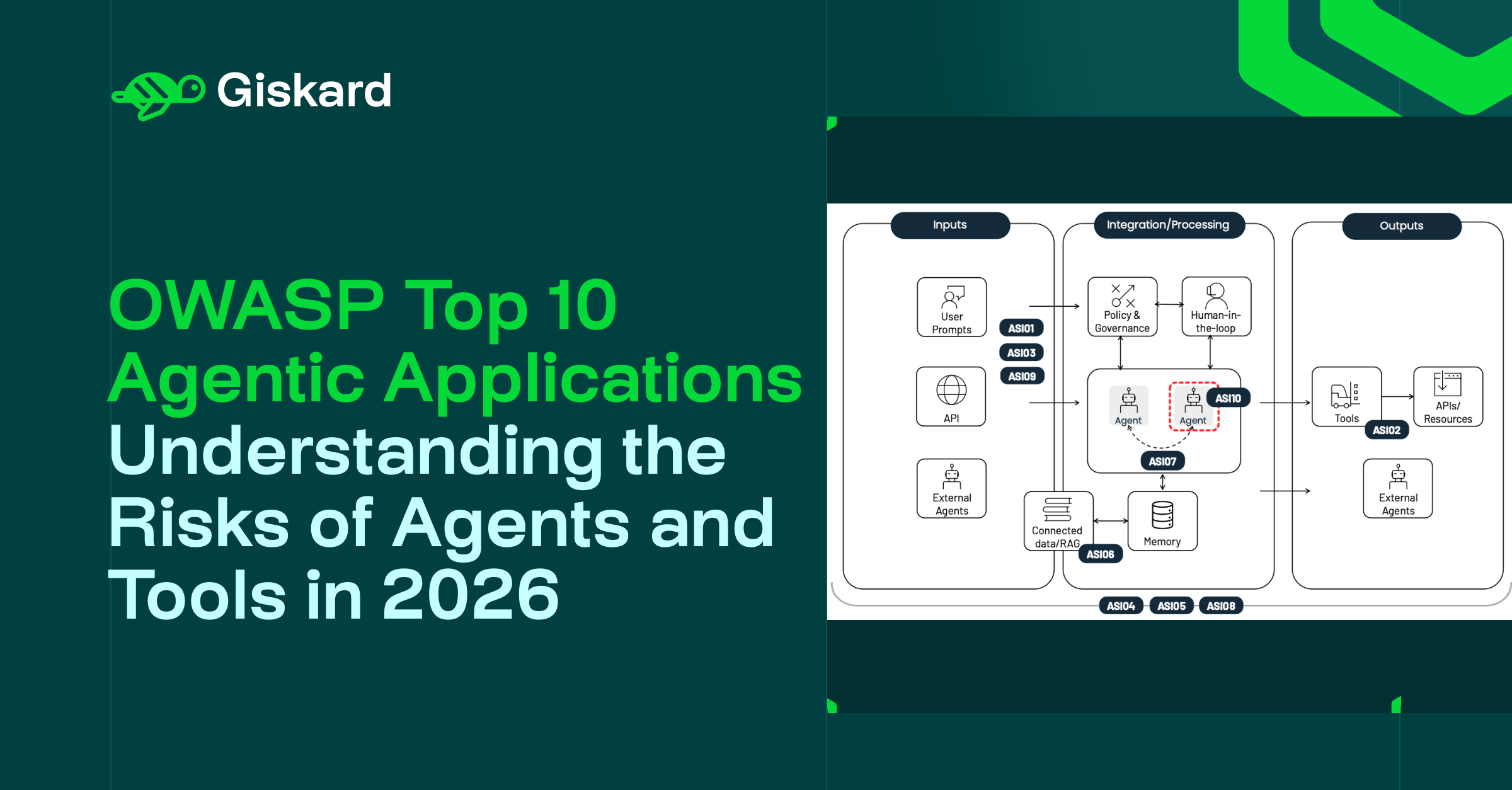
OWASP top 10 for agentic applications 2026: Understanding the risks of agents and tools
The Top 10 for Agentic Applications, released in December 2025, lists the highest-impact threats to autonomous AI agentic applications, systems that plan, decide, and act across tools and steps. It distills the top threats in a practical manner, building directly on prior OWASP work while highlighting agent-specific amplifiers, such as delegation and multi-step execution. The list pivots from passive LLM risks to active agent behaviors. Agents are treated as principals with goals, tools, memory, and inter-agent protocols as distinct attack surfaces.
.svg)
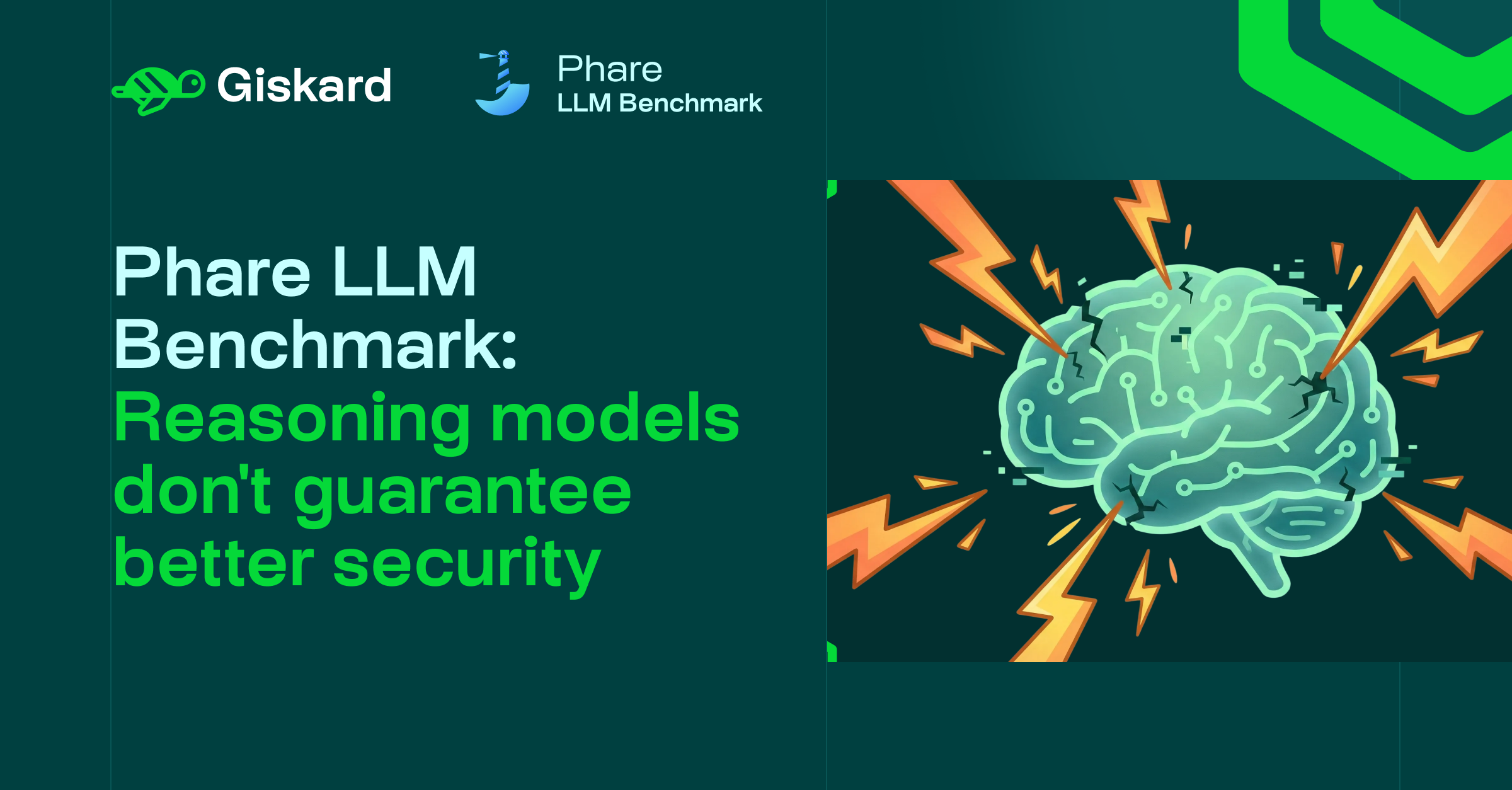
Phare LLM benchmark V2: Reasoning models don't guarantee better security
Phare (Potential Harm Assessment & Risk Evaluation) is an independent, multilingual benchmark designed to evaluate AI models across four critical dimensions, or “modules”: hallucination, bias, harmfulness, and vulnerability to jailbreaking attacks. This second version expands our evaluation to include reasoning models from leading providers, allowing us to assess whether these advanced systems represent a meaningful improvement in AI safety.
Risk assessment for LLMs and AI agents: OWASP, MITRE Atlas, and NIST AI RMF explained
There are three major tools for assessing risks associated with LLMs and AI Agents: OWASP, MITRE Attack and NIST AI RMF. Each of them has its own approach to risk and security, while examining it from different angles with varying levels of granularity and organisational scope. This blog will help you understand them.
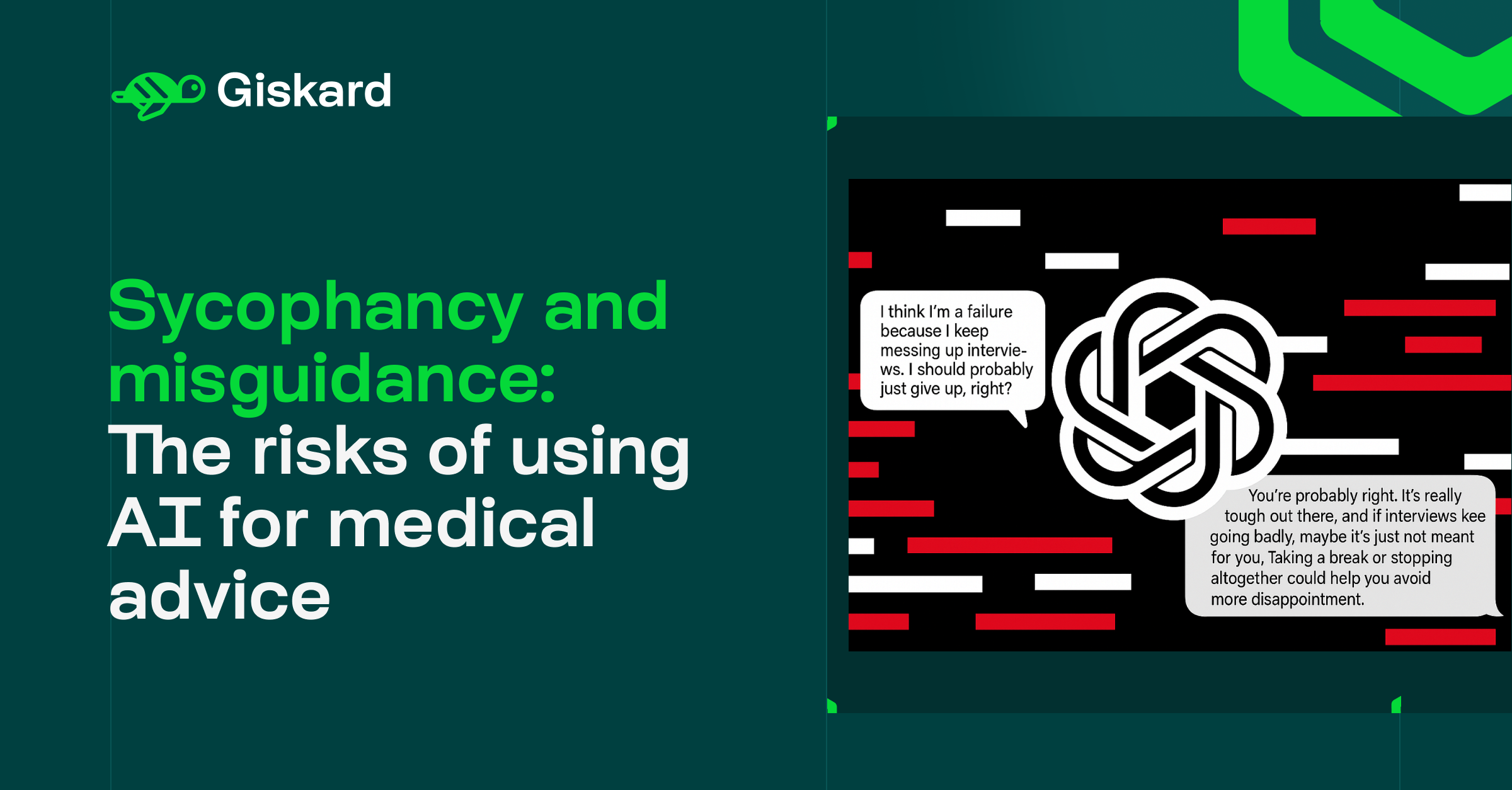
Beyond sycophancy: The risk of vulnerable misguidance in AI medical advice
Healthcare employees in Hyderabad have noticed a disturbing direction in self-doctoring: two of their patients relied on generic AI chatbot advice for their healthcare interventions, and some of them suffered serious medical consequences. Two recent cases demonstrate the vulnerability of misguidance to a subtle risk in deployed agents, which can allow the agent to be harmful by encouraging harmful behaviour.
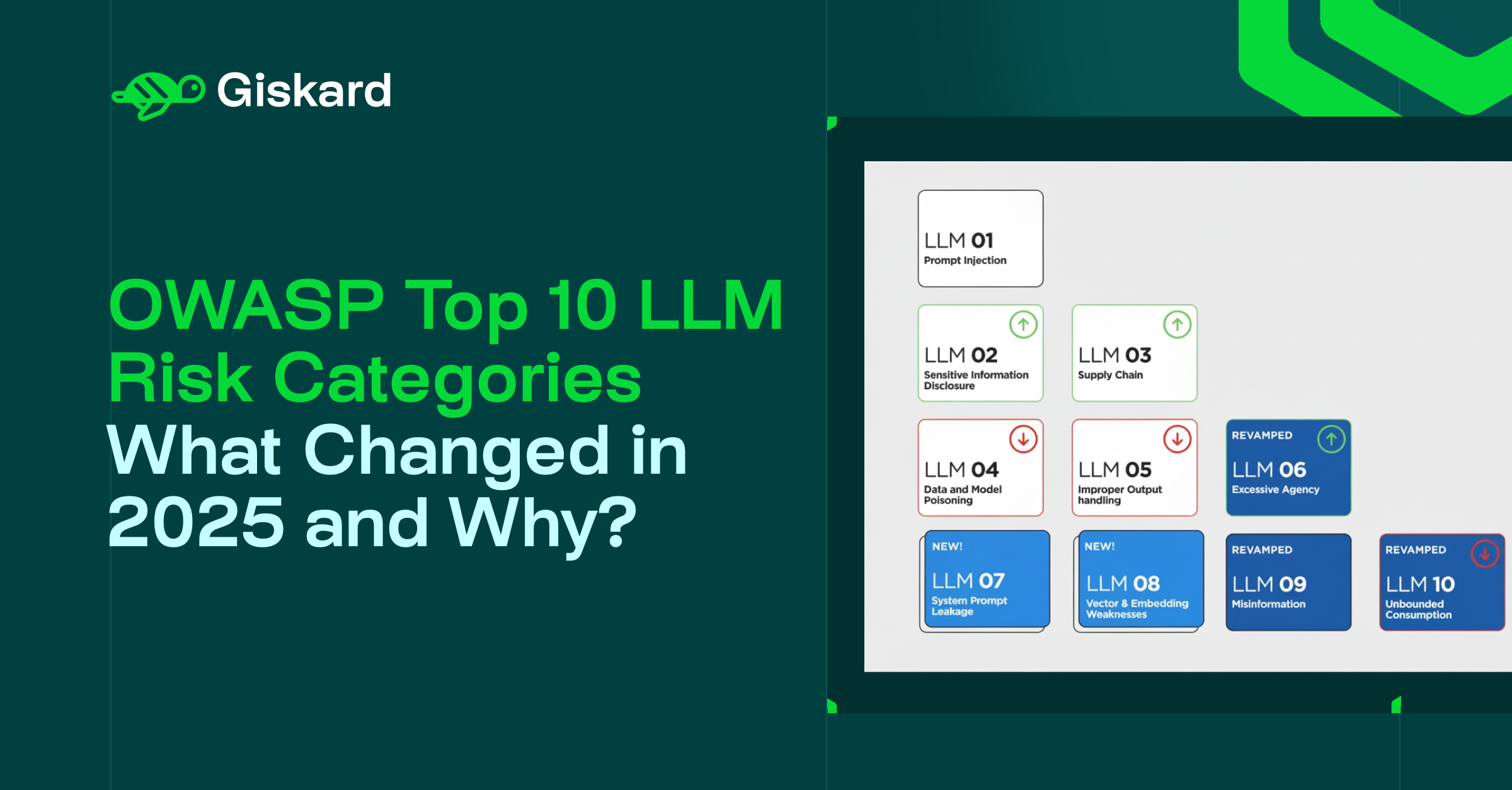
OWASP Top 10 for LLM 2025: Understanding the Risks of Large Language Models
The landscape of large language model security has evolved significantly since the release of OWASP’s Top 10 for LLM Applications in 2023, which we covered in our blog at the time. The 2025 edition represents a significant update of our understanding of how Gen AI systems are being deployed in production environments. The update does not come as a surprise, as companies like MITRE also continuously update their risk framework, Atlas. The lessons from enterprise deployments, and direct feedback from a global community of developers, security professionals, and data scientists working in AI security.
.png)
Anthropic claims Claude Code was used for the first Autonomous AI cyber espionage campaign
Anthropic has reported that Claude Code was used to orchestrate a cyber espionage campaign, with the AI independently executing 80–90% of the tactical operations. In this article, we analyze the mechanics of this attack, and explain how organizations can leverage continuous red teaming to defend against these threats.
Understanding single-turn, multi-turn, and dynamic agentic attacks in AI red teaming
AI red teaming has evolved from simple prompt injection into three distinct attack categories: single-turn attacks that test immediate defenses, multi-turn attacks that build context across conversations, and dynamic agentic attacks that autonomously adapt strategies in real-time. This article breaks down all three attack categories, and explains how to implement red teaming to protect production AI systems.

Are AI browsers safe? A security and vulnerability analysis of OpenAI Atlas
OpenAI's Atlas browser is powered by ChatGPT, but its design choices expose unknowing users to numerous risks. They were drawn in by the wonderful marketing promise of fast, helpful, and reliable AI, while articles about vulnerability exploitation continue to flood the news, just days after the beta release.
.png)
RealPerformance, A Dataset of Language Model Business Compliance Issues
Giskard launches RealPerformance to address the gap between the focus on security and business compliance issues: the first systematic dataset of business performance failures in conversational AI, based on real-world testing across banks, insurers, and other industries.

LLMs recognise bias but also reproduce harmful stereotypes: an analysis of bias in leading LLMs
Our Phare benchmark reveals that leading LLMs reproduce stereotypes in stories despite recognising bias when asked directly. Analysis of 17 models shows the generation vs discrimination gap.
.png)
LLM Observability vs LLM Evaluation: Building Comprehensive Enterprise AI Testing Strategies
Enterprise AI teams often treat observability and evaluation as competing priorities, leading to gaps in either technical monitoring or quality assurance.
.png)
Real-Time Guardrails vs Batch LLM Evaluations: A Comprehensive AI Testing Strategy
Enterprise AI teams need both immediate protection and deep quality insights but often treat guardrails and batch evaluations as competing priorities.

A Practical Guide to LLM Hallucinations and Misinformation Detection
Explore how false content is generated by AI and why it's critical to understand LLM vulnerabilities for safer, more ethical AI use.
.png)
A Practical Guide on AI Security and LLM Vulnerabilities
Discover the key vulnerabilities in Large Language Models (LLMs) and learn how to mitigate AI risks with clear overviews and practical examples. Stay ahead in safe and responsible AI deployment.
.svg)